
Downtown Public Safety Panel: Crime Prevention Through Environmental Design Discussion
Last week, the Asheville Downtown Improvement District hosted the second event in our Downtown Public Safety Panel Series, bringing together law enforcement, architecture, and urban planning for a conversation that was honest, grounded, and long overdue.
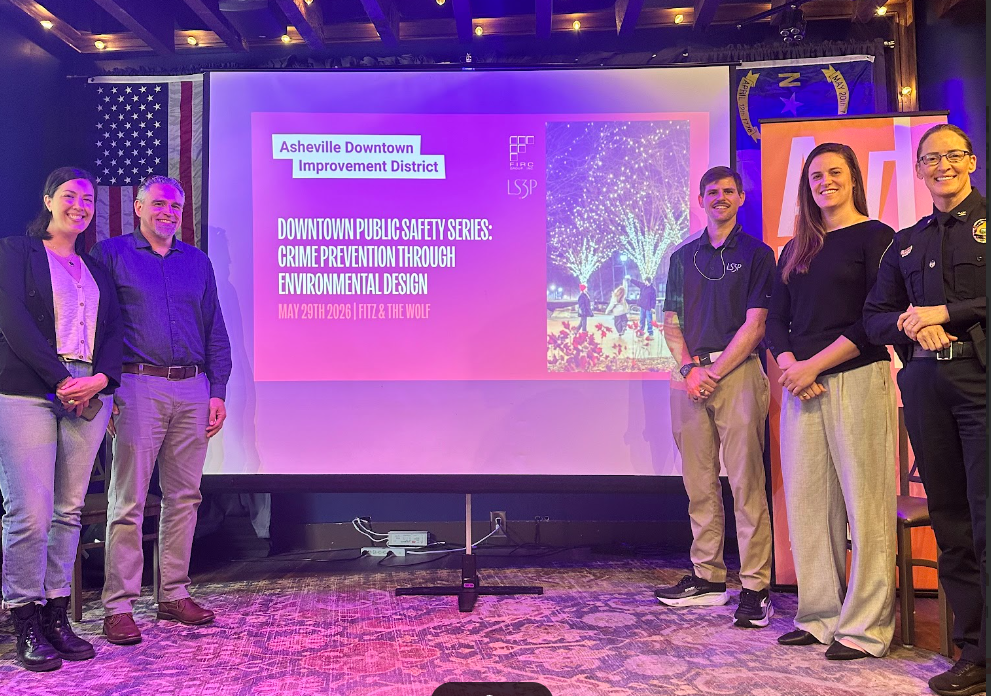
A sincere thank you to FIRC Group for opening Fitz and the Wolf and providing coffee and pastries. And to our panelists: Interim Police Chief Jackie Stepp of the Asheville Police Department, Kyle Novak AIA CPD and Tyler McKenzie AIA CPD of LS3P, and David Hazzard PLA of the City of Asheville Planning and Urban Design division. Each of them brought a distinct and necessary lens to the room.
What We Mean When We Say Public Safety
When ADID talks about public safety, we mean the welfare and protection of all people in our shared spaces. A safe Downtown is one where people feel free from threats to their person and property, where public spaces are welcoming and active, and where the design of our environment supports the dignity and belonging of every person who walks through it. We also want to be clear that homelessness and public safety are too often conflated in these conversations. The data tells a different story: we know that experiencing homelessness are statistically more likely to be victims of crime than perpetrators of it. Regardless of housing status, we all deserve to feel safe in our public spaces, and that perspective shapes how we approached this discussion.
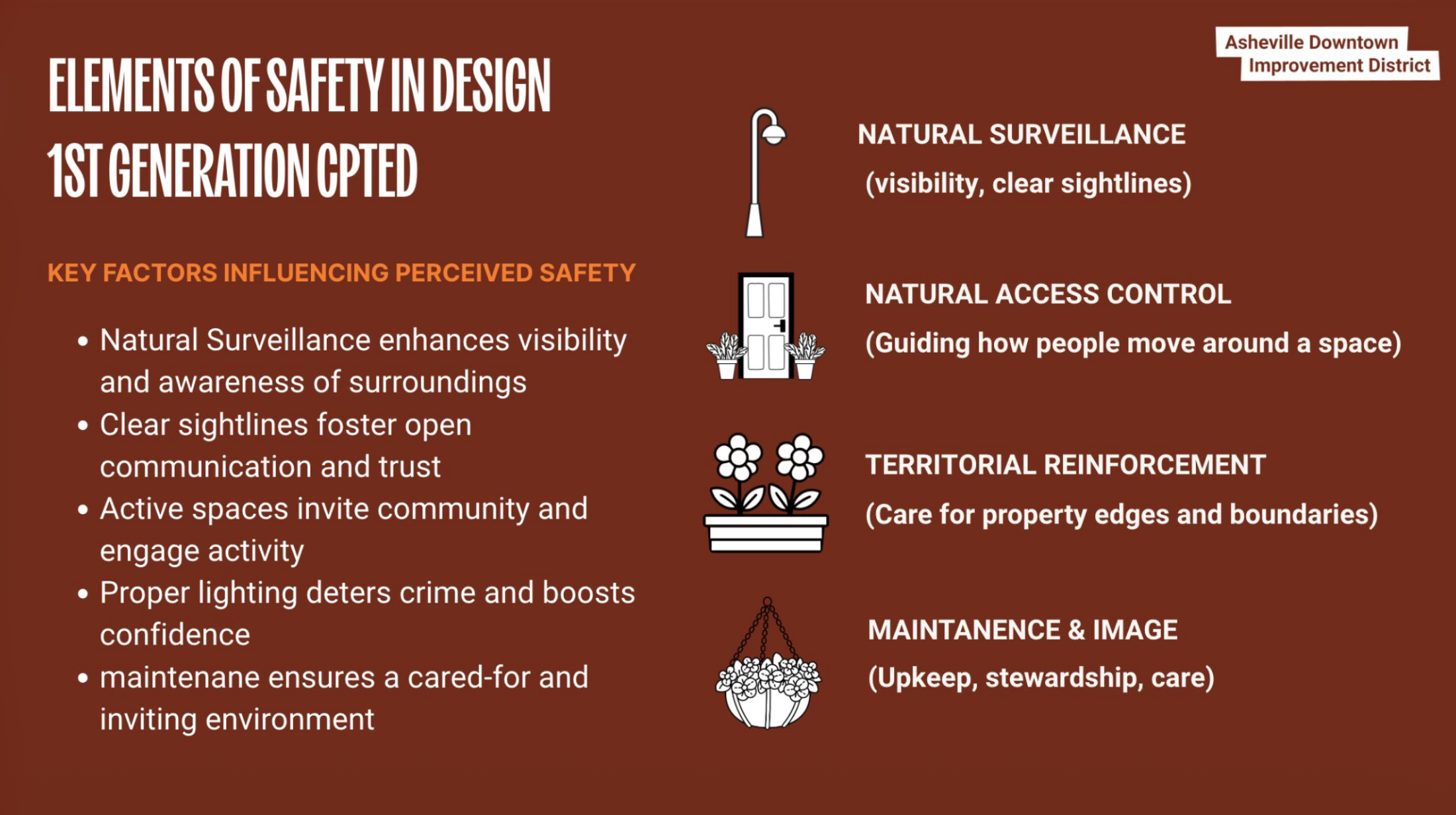
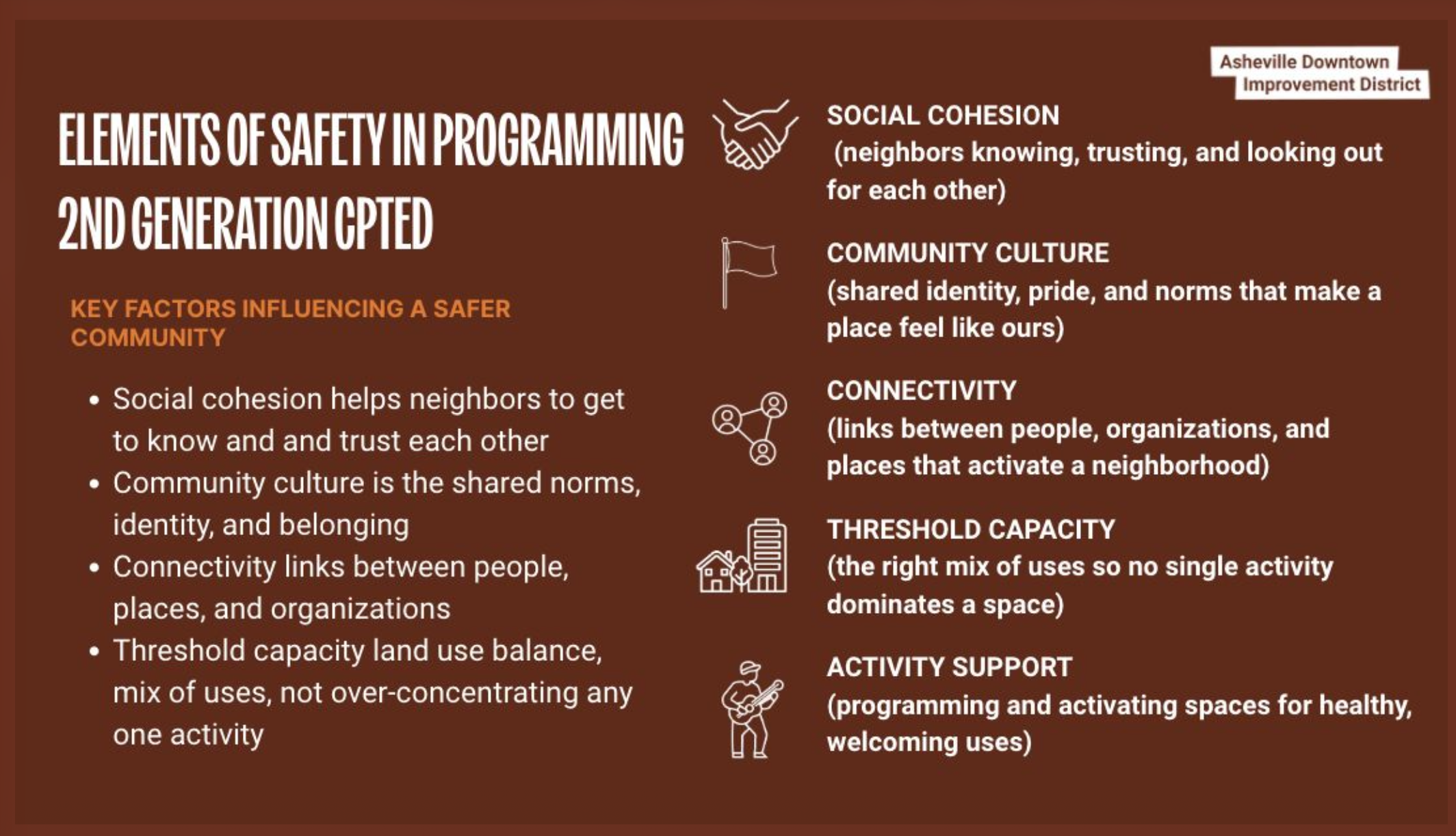
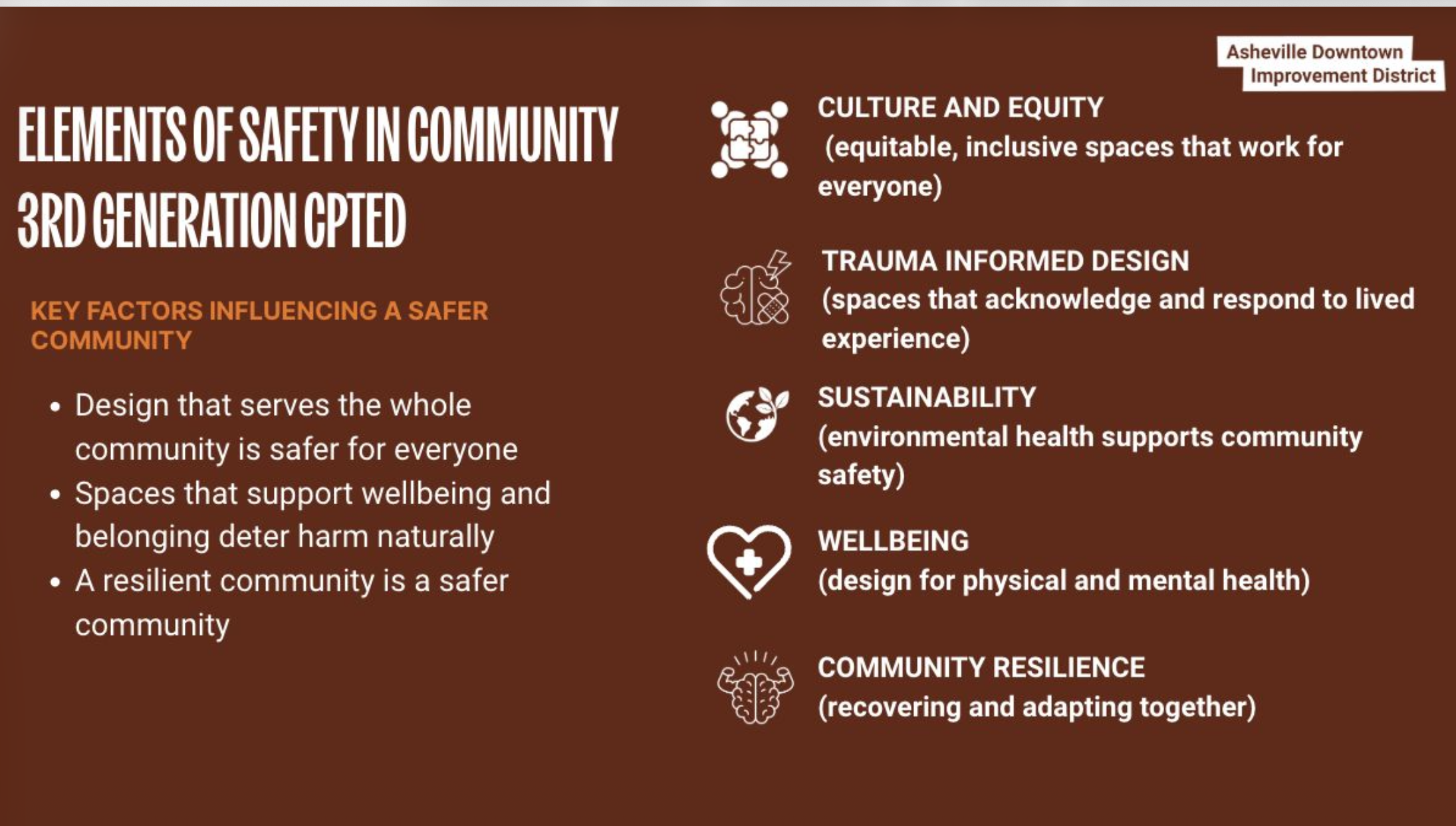
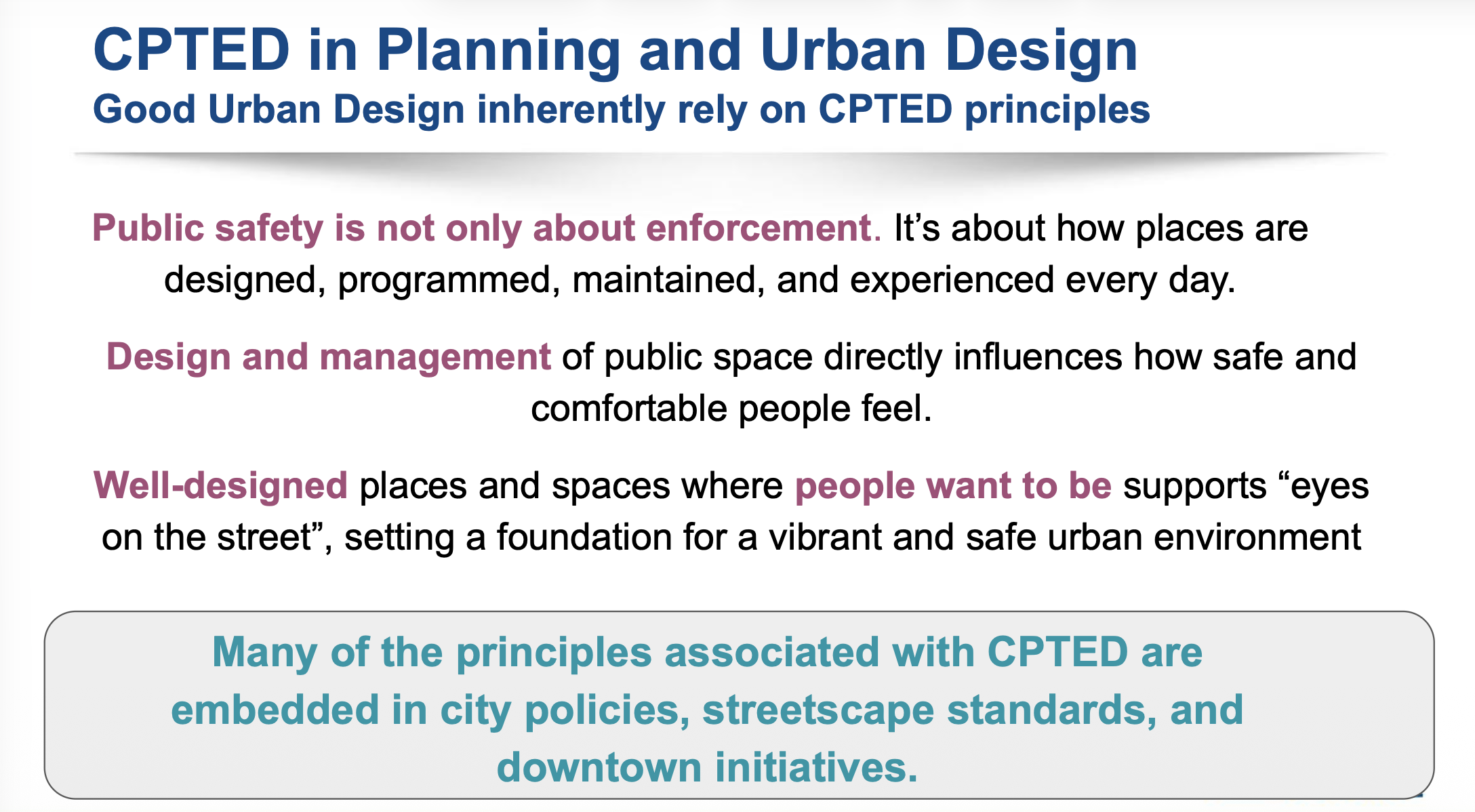
The organizing framework for the morning was Crime Prevention Through Environmental Design, or CPTED. We were deliberate about how we introduced it. CPTED is a tool that has been misused, applied in ways that pushed vulnerable people out of public spaces rather than investing in community. First generation CPTED focused heavily on physical design: natural surveillance, access control, territorial reinforcement, maintenance and image. Second generation brought the framework back toward its Jane Jacobs roots, safety through social cohesion, community culture, activation, and belonging. Third generation asks harder questions about equity, trauma, and who design serves and who it leaves out.
A lot of what ADID does every day already connects to this thinking. Our Ambassador program, public art investments, flower baskets, seasonal lighting, and programming are all CPTED in practice.
What APD Shared
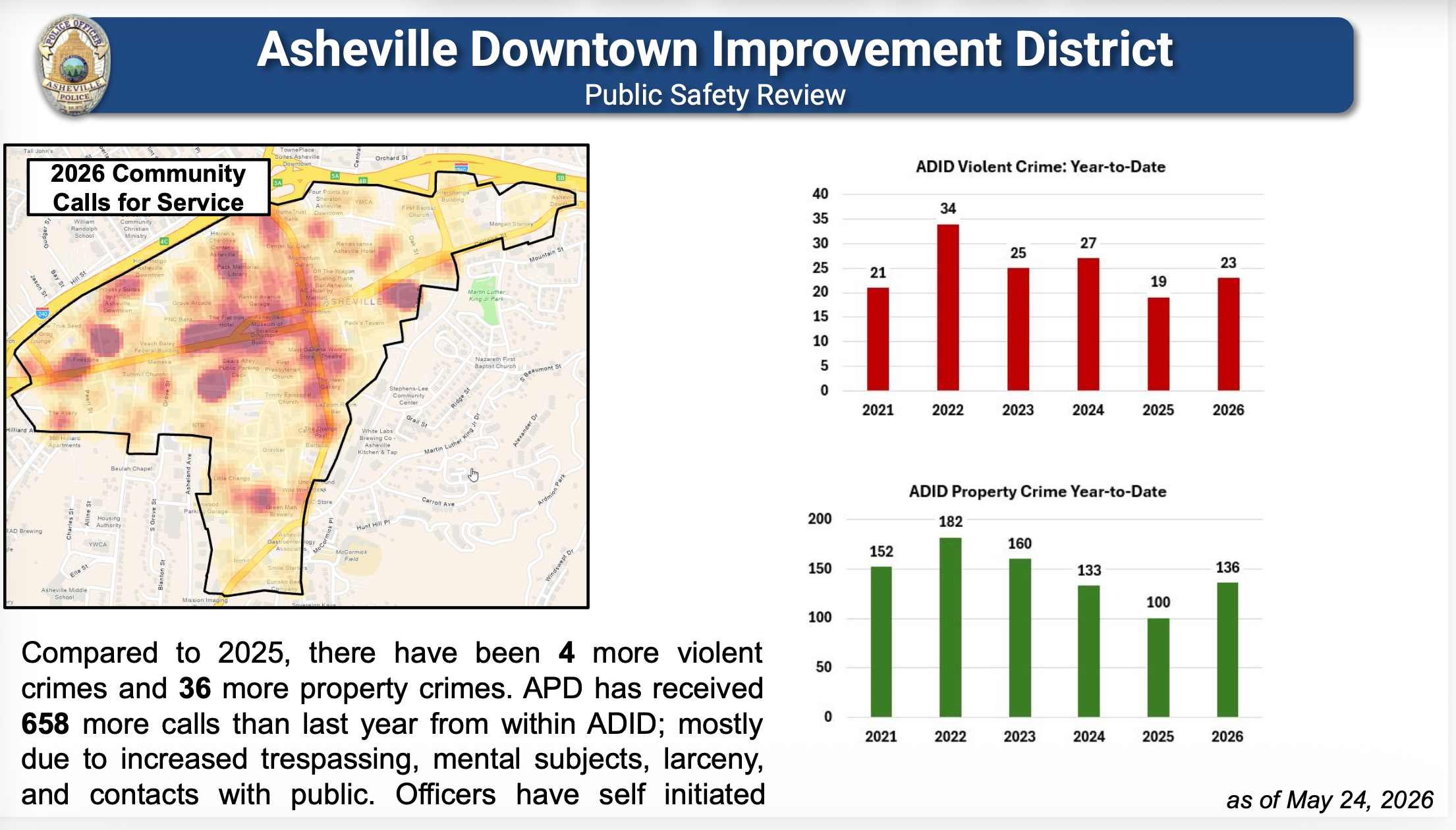
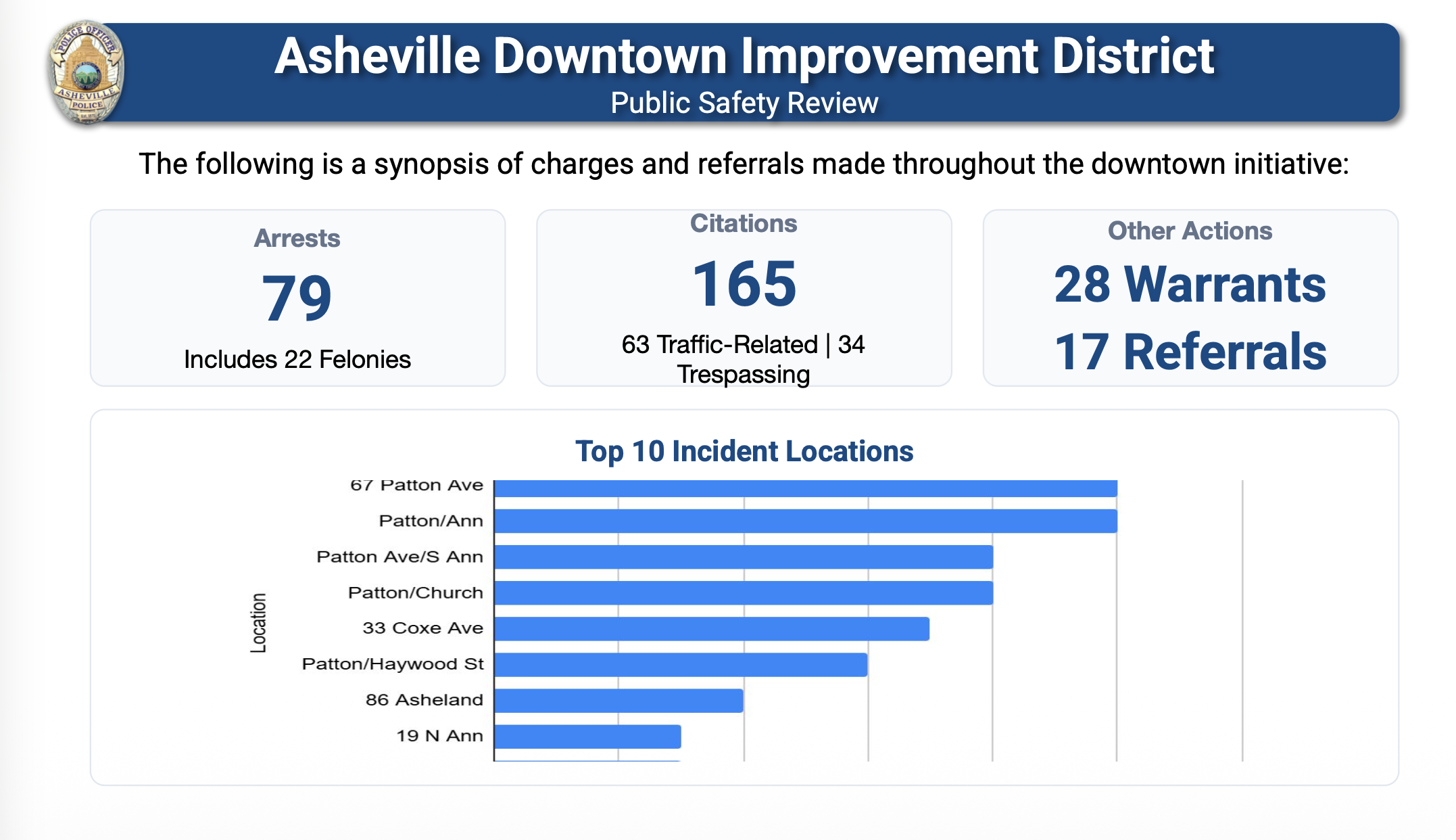
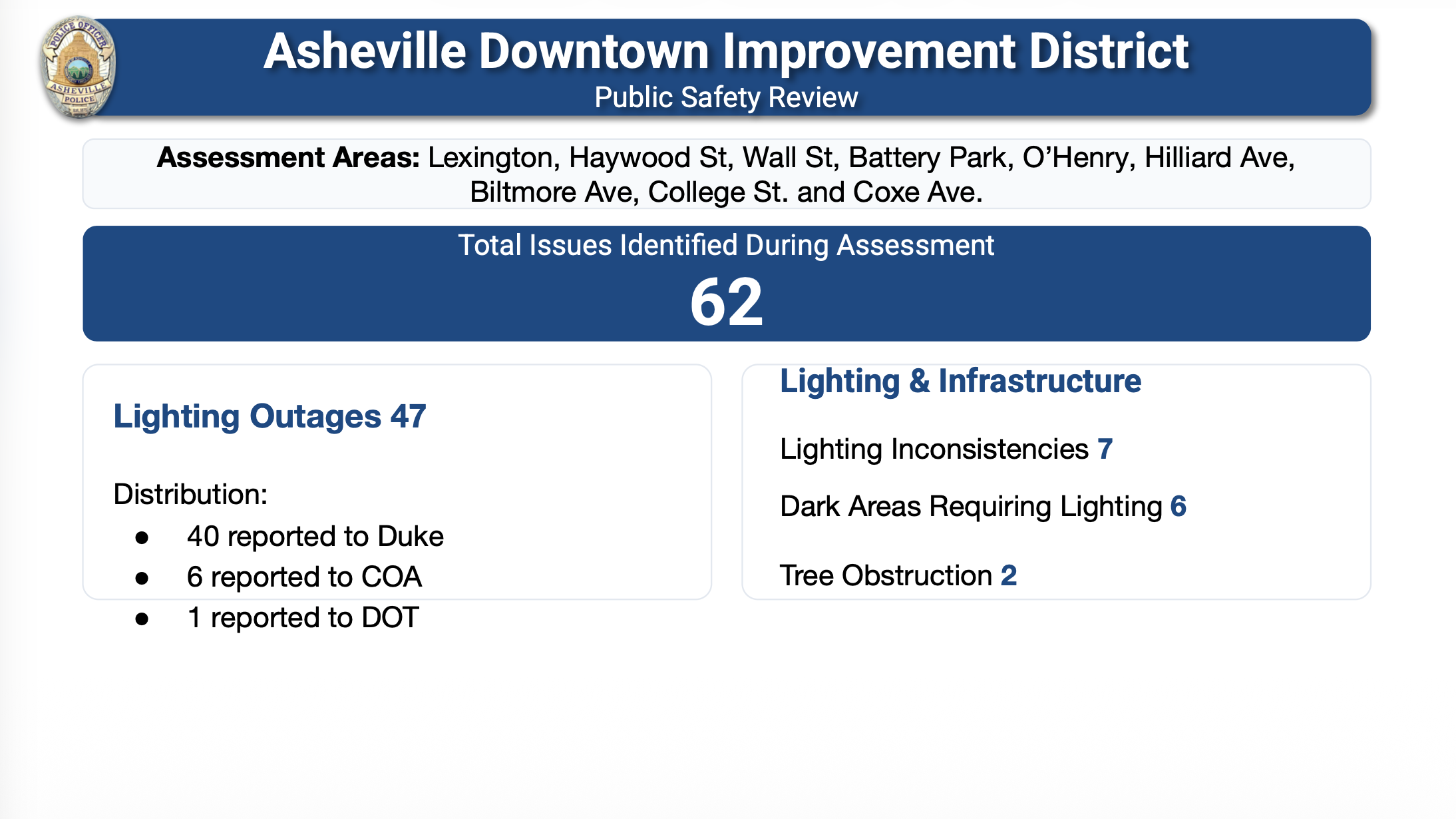
Chief Stepp presented APD's Downtown initiative data and a lighting assessment that covered Lexington, Haywood, Wall Street, Battery Park, O'Henry, Hilliard, Biltmore, College, and Coxe. Chief Stepp made a point that landed with the room: Asheville is one of the darkest cities she has encountered in her career. There are a significant number of outages, and one thing we can all do to help is to report any street light outages on the Asheville App.
APD is also operating under significant staffing pressure. The department is currently 19% below authorized staffing levels, with 45 vacancies out of 232 allotted positions. When accounting for personnel on leave and officers still in training, the effective operational level is 33% below target, with 17 officers transitioning to solo status in July. That context matters when we talk about what enforcement alone can and cannot solve.
APD Downtown Safety Initiative
The initiative data showed 79 arrests (including 22 felonies), 165 citations, and 17 referrals to services. Year-to-date violent crime in the ADID boundary sits at 23 incidents, down significantly from a 2022 peak of 34. Property crime is at 136 year-to-date, also down from the 2022 peak of 182. APD has received 658 more calls from within the ADID boundary than at this point last year, driven largely by increased trespassing, mental health contacts, and larceny. The top incident locations cluster heavily along Patton Avenue and Coxe Avenue, which aligned directly with our Ambassador data.
What the Architects Showed Us
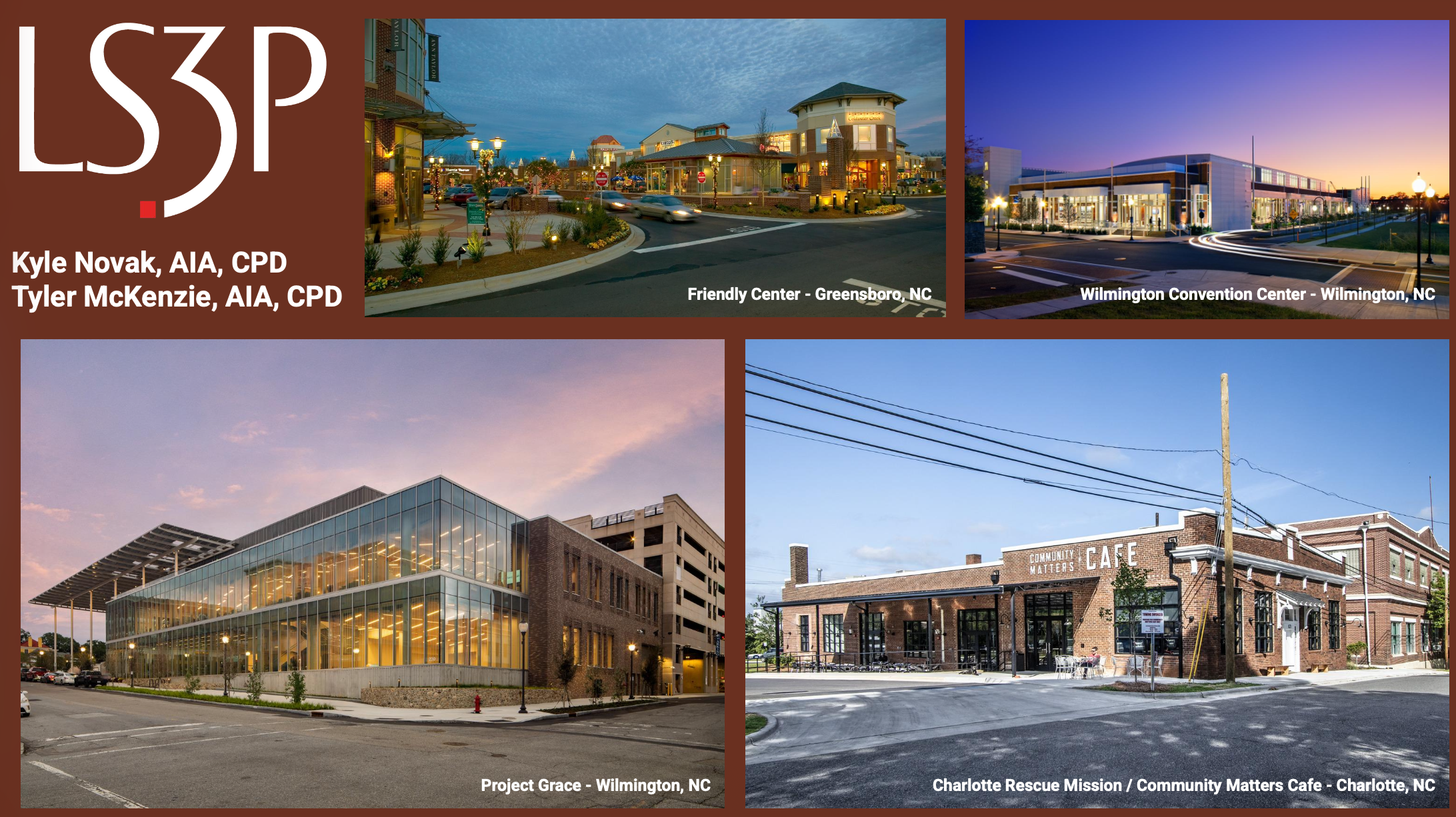
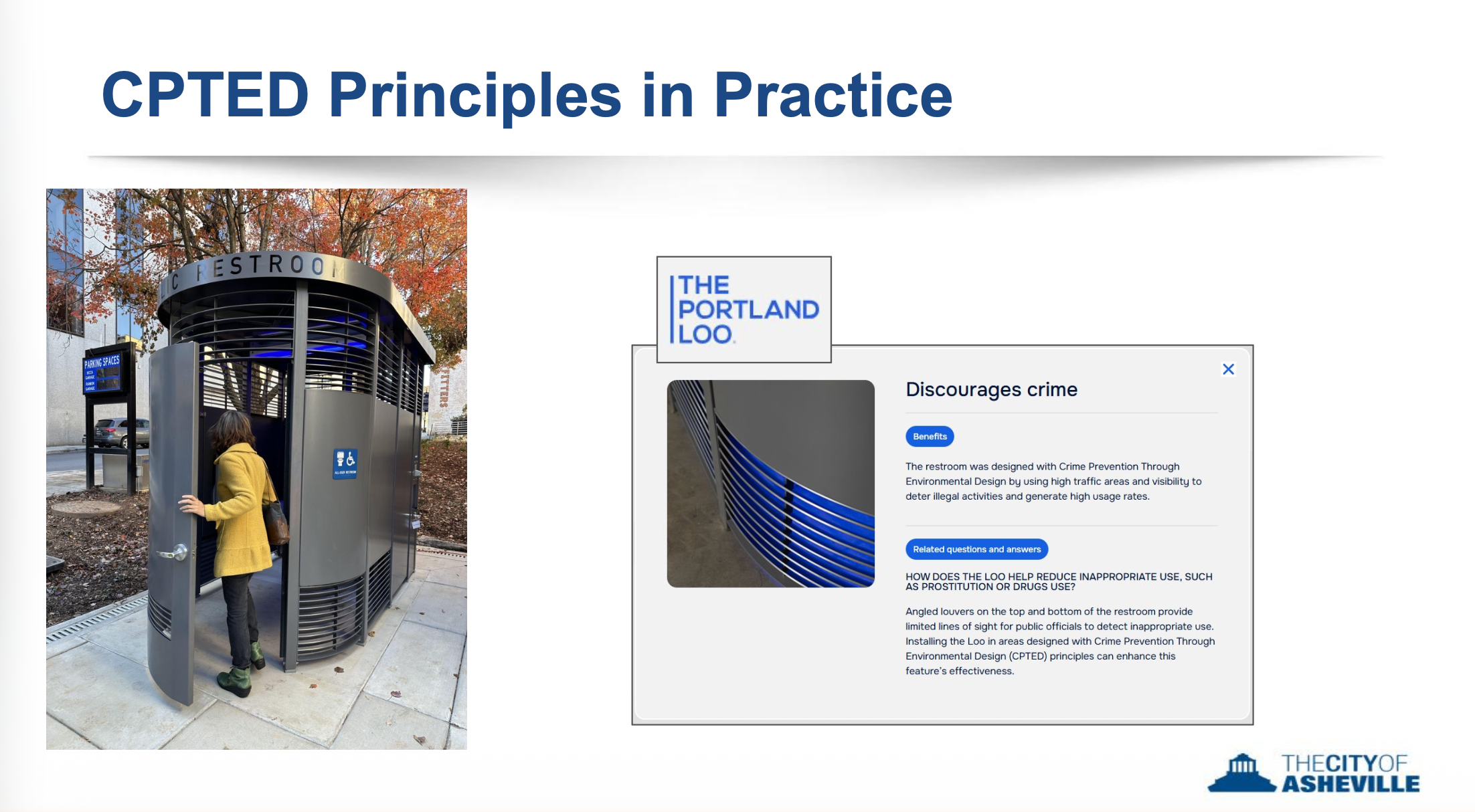
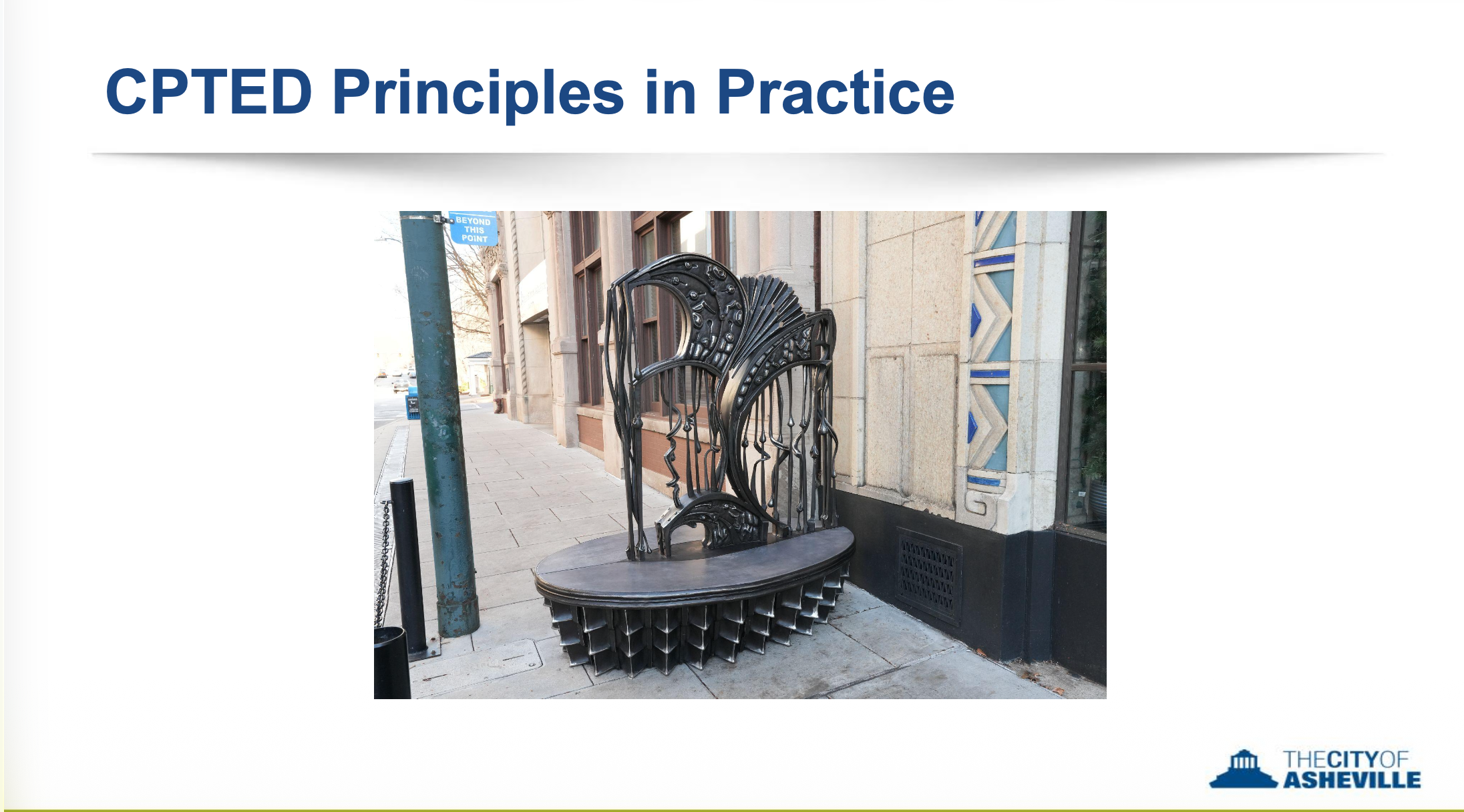
LS3P Project examples where CPTED principals are front and center - lighting, community stewardship, access control, maintenance and landscaping, as well as transparency visibility featured prominently throughout.
Kyle and Tyler from LS3P walked through CPTED principles applied to real projects, civic spaces, libraries, convention centers, and mixed-use corridors across the Carolinas. One point that reframed the room's thinking on lighting: Paris, known as the City of Light, is actually remarkably dim when viewed from satellite compared to other major cities. What makes it work is that nearly all of its lighting is at pedestrian scale. Brightness matters less than placement. Light that serves the person on the sidewalk creates safety. Light aimed at the sky does not. Also discussed is the CPTED lesson, the “2 foot/6 foot rule” which specifies planting heights: shrubs should be no higher than 2’ from the ground, and trees should trimmed to six feet or higher to allow for clear sightlines and visibility.
What the City Is Working On
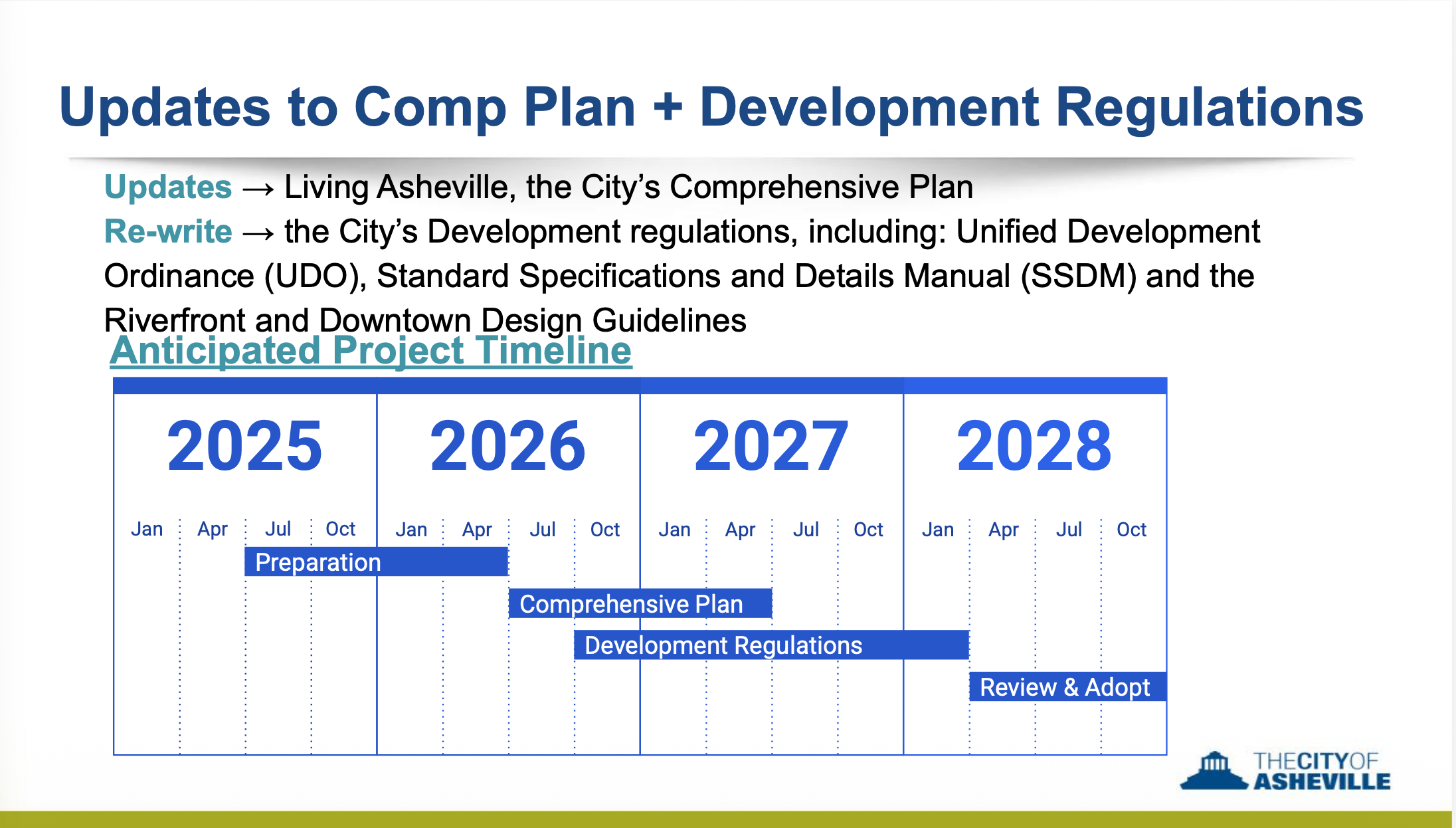
David Hazzard from the City's Planning and Urban Design division connected CPTED principles to active policy work. The City is currently updating Living Asheville, its Comprehensive Plan, and rewriting its development regulations, including the Unified Development Ordinance, Standard Specifications and Details Manual, and the Riverfront and Downtown Design Guidelines. That process runs through 2028. CPTED principles are embedded in city policies, streetscape standards, and Downtown initiatives. The work happening at the policy level now will shape how Downtown looks and functions for decades.
Three Locations We Looked at Together
We spent part of the morning applying these principles to three Downtown hotspots flagged by both Ambassador operations data and APD. In May alone, ADID Ambassadors documented 673 abandoned personal items, 223 graffiti incidents, 70 paraphernalia incidents, 55 needles, 37 biohazards, and 25 outreach engagements and de-escalations. Three locations rise to the top consistently: the Asheville Regional Transit Station on Coxe Avenue, Wall Street, and Patton Avenue near the GSA building. The The City and Community has streetscape improvement projects and investments in the works in each of these areas, which is really good news for Downtown!
The Question the Room Kept Coming Back To
The most generative thread from the audience was also the hardest: how do you design a Downtown that is genuinely welcoming and effectively crime-resistant at the same time? The tension is real. What the panel made clear is that CPTED, applied thoughtfully and in its current generation, does not resolve that tension by choosing a side, It holds both. A space where people want to be is a safer space. Activation, maintenance, sightlines, and belonging are not competing values. They are the same strategy.
We want to keep this conversation going. More panels ahead. If there is a topic you want to see addressed, reach out: erica@ashevilledowntown.org.
