What Downtown Asheville's Best Business Minds Are Doing Differently Right Now
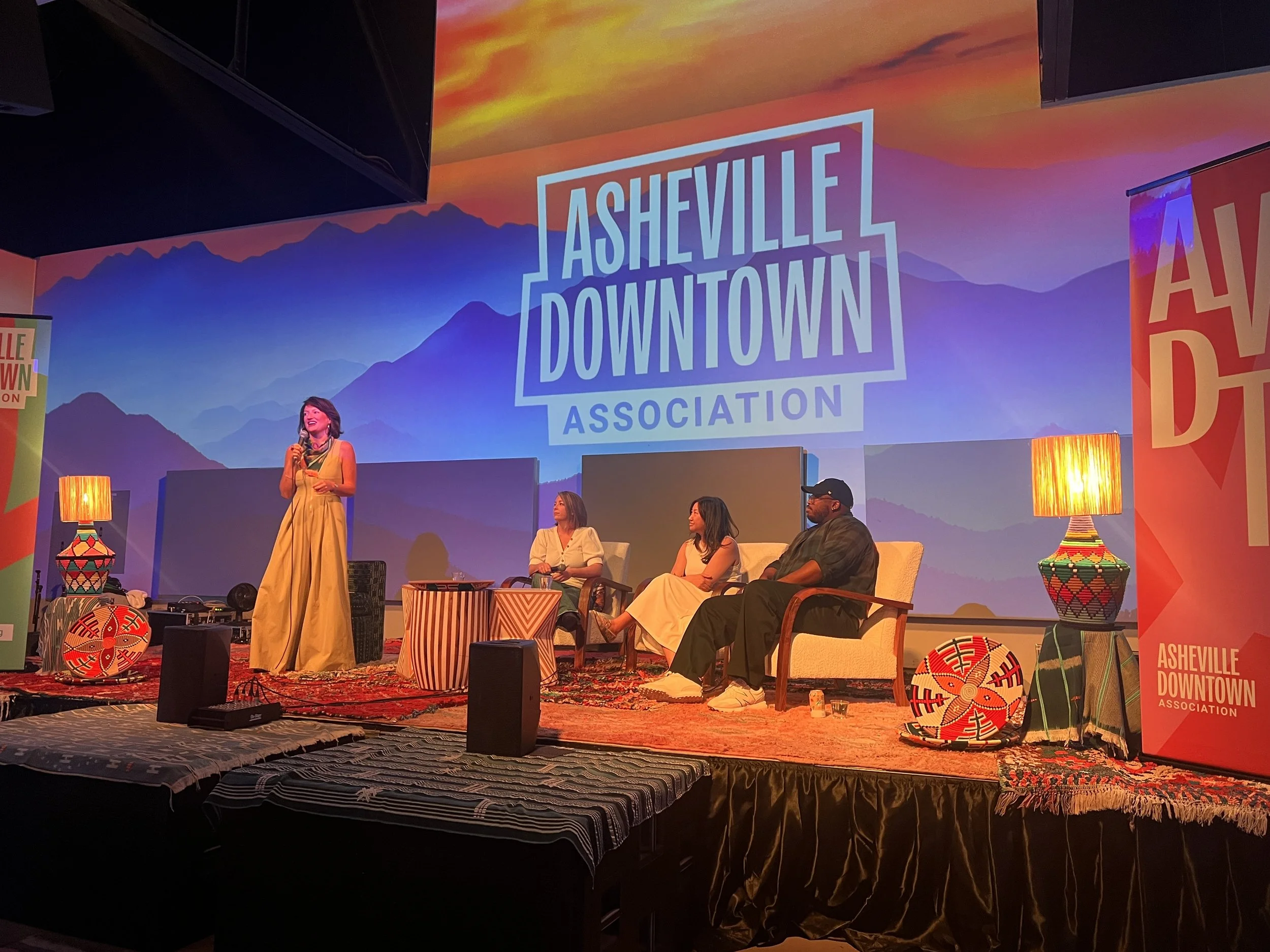
Emily Glasgow, Asheville Downtown Association, Catherine Campbell, Spicer Greene Jewelers, Ha Nguyen, East Fork Pottery, JD Ellison, JD Ellison & Company
At a recent member mixer hosted by the Asheville Downtown Association, three marketing and operations leaders sat down to talk honestly about what's working, what's not, and how small businesses can build lasting customer relationships without burning through budget. Here's what they said.
Stop selling. Start telling.
The single biggest shift panelists pointed to wasn't a platform or a tactic -- it was a mindset change about messaging.
Catherine Campbell, CMO of Spicer Greene Jewelers put it plainly: the origin story isn't enough. "Find the turning point in your brand -- people really latch onto that and they remember." Catherine used the example of a chef who discovered his grandmother's secret recipe not through culinary training, but through time spent at her bedside. That's the story worth telling. Not the résumé. The moment.
Ha Nguyen, Chief Commercial Officer at East Fork Pottery, described her company's hard-won lesson after years of chasing first-time customers through paid social. "You can't get the East Fork story out in a 10-second ad scrolling on your phone." The fix wasn't a better ad -- it was abandoning the channel for storytelling that actually had room to breathe: email, events, behind-the-scenes content, transparency about values and pricing. "It's not about a quick win. It's about something that's going to drive them back even if it takes six months."
Takeaway: Audit your current messaging. Are you describing what you sell, or why it matters? Find the turning point -- the moment your brand became what it is -- and lead with that.
Small events beat big ones every time.
Both Catherine and Ha were emphatic: the most powerful marketing tool available to Downtown businesses right now is a small, well-curated gathering.
Catherine described a Spicer Greene whiskey tasting capped at 20 people that generated outsized excitement and word-of-mouth. "People want to meet other people around shared interests -- not through their follower counts." The event didn't need to be elaborate. It just needed to give people a reason and a room.
The logic behind it: you need other people to carry your story for you. Events create the conditions for that to happen. A customer who experienced something memorable with your brand will tell that story far more convincingly than any ad you can buy.
Takeaway: Plan one small, interest-driven event in the next 60 days. Keep the guest list tight. Make it easy to talk to each other. The goal isn't impressions -- it's conversation.
Visibility doesn't require a big budget. It requires a decision.
Consultant JD Ellison challenged the room on budget excuses directly: "You don't have a budget because you have to set the budget. So do you not have money, or do you not have money because you're cheap?"
That said, the panel offered real strategies for businesses operating lean. Ha's approach: show up in person. She goes out into the community consistently, builds relationships, and lets word-of-mouth do the heavy lifting. Catherine recommended pooling resources with neighboring businesses -- splitting the cost of a billboard, co-promoting events, going in on shared advertising.
Before spending anything, JD pushed businesses to do their homework. Are you asking every customer how they heard about you? Do your staff do end-of-day notes on what's landing? Are you using free tools like Placer.ai -- available to Downtown Association members at no cost -- to understand foot traffic and demographics? "You really have to know where your customers are before you lay down the money."
Takeaway: Before your next marketing spend, run two weeks of active customer listening. Ask how they found you. Track what they respond to. That data will make every dollar you spend after it more effective.
Retention is a relationship. Treat it like one.
Ha reads every customer feedback form herself. Catherine's team sends birthday cards, anniversary cards, and a complimentary cleaning kit to every high-value jewelry customer -- the kit costs about six dollars and keeps the Spicer Greene name in their home for the next year and a half. A personal check-in from the salesperson follows within the first week of purchase.
The principle both kept returning to: people want to feel known. A note from a business owner, a surprise follow-up, a behind-the-scenes look at how something is made -- these things cost almost nothing and create the kind of loyalty that paid acquisition never can.
East Fork is transparent about pricing, acknowledges when a product is out of someone's budget, and offers alternatives. "We totally understand if you can't purchase at this time. We'll find ways to have other products in range." That honesty, Ha said, builds more trust than any discount.
Takeaway: Map your post-purchase touchpoints. What happens after someone buys? If the answer is nothing, you're leaving your most valuable marketing asset -- a satisfied customer -- completely idle.
On agencies: be a real partner, or don't bother.
Ha shared East Fork's experience hiring a well-regarded New York agency that ultimately burned out her team by demanding 30 creative ads to test down to two. They ended the relationship, went back to their internal team, dropped all Meta advertising, and the business grew 30%.
JD named the most common failure pattern: waiting until things are nearly broken, then hiring without doing due diligence. His advice -- always talk to an agency's past clients, be clear on your own goals before entering discovery, and ask one clarifying question: can they tell you what they don't do? A good agency knows its limits.
But the harder truth JD offered is this: if you're not willing to show up and engage, no agency can save you. "If you're not willing to talk to them, they cannot be a partner. You're going to get mediocre work and it's not going to be anybody's fault but your own."
Takeaway: If you're considering bringing outside marketing help in, start by getting clear on what you actually need and what success looks like. Then ask every prospective agency to walk you through a client relationship that didn't work out. What you learn will tell you everything.
The Asheville Downtown Association hosts quarterly member mixers throughout the year. The next one is August 3 -- theme: urban planning and development.